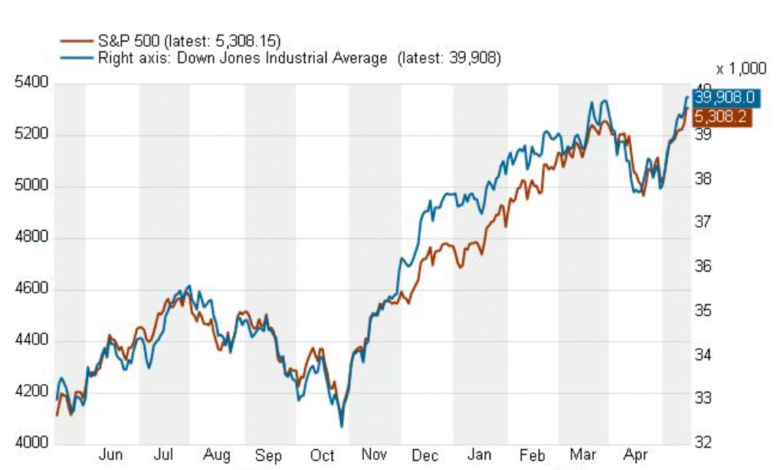
The Dow Jones Industrial Average, or simply DJIA, is one of the most recognized financial indexes in the world. It’s a number you’ll often hear on the news whenever the stock market is mentioned — “The Dow is up 200 points today” or “The Dow plunged 300 points after the earnings report.” But what exactly does that mean? Let’s break it down in an approachable way, while still covering the expert-level details you’d expect.
What Is the DJIA and Why Does It Matter?
The Dow Jones Industrial Average is a stock market index that tracks 30 major companies listed on U.S. stock exchanges. Think of it as a snapshot of how some of the biggest players in the American economy are performing. These companies are from different sectors — technology, finance, healthcare, and more — and collectively represent a broad picture of the market’s health.
The DJIA was first introduced in 1896 by financial journalist Charles Dow and statistician Edward Jones, hence the name. Back then, it only included 12 industrial companies like General Electric and American Tobacco. Over time, the index expanded to 30 companies and evolved to include giants like Apple, Microsoft, and Coca-Cola. Even though it’s over a century old, the DJIA remains one of the most influential indicators of economic confidence.
One reason the DJIA matters so much is that it gives both investors and the general public a quick way to gauge how the market is doing. If the Dow rises, people tend to feel optimistic about the economy. If it drops sharply, confidence can fall. That’s why you’ll often see headlines focusing on how “the Dow” performed during the day — it’s like the heartbeat of Wall Street.
How the DJIA Is Calculated
The way the DJIA is calculated might surprise you. Unlike other indexes such as the S&P 500, which are market capitalization-weighted (meaning companies with bigger market values have more influence), the Dow is price-weighted. This means that companies with higher stock prices have a bigger impact on the index, even if they’re not the largest companies by market cap.
Here’s a simple way to understand that: imagine Apple’s stock price is $180, and McDonald’s stock is $260. Even if Apple’s total market value is much larger, a $1 move in McDonald’s stock would have more influence on the Dow’s overall movement than a $1 move in Apple’s. That’s because McDonald’s stock price is higher.
To calculate the DJIA, the sum of all 30 stock prices is divided by a special number called the Dow Divisor. This divisor changes whenever a stock split, merger, or other major event occurs to keep the index consistent over time. It’s a bit of a complicated system, but it ensures the index remains comparable from one decade to another.
This method sometimes gets criticized because it doesn’t reflect a company’s real size or importance in the economy. Still, the price-weighted system has stood the test of time, mainly because it keeps the Dow easy to understand and quick to calculate.
The Companies That Make Up the DJIA
One of the most fascinating aspects of the DJIA is how its composition evolves with time. The index isn’t static — it changes as the economy changes. The 30 companies in the Dow are chosen to represent the core strength of the U.S. economy, and that means older industrial firms sometimes get replaced by modern tech leaders.
For instance, companies like General Electric were part of the Dow for more than a century but were eventually replaced as their relevance faded. In recent years, Apple, Salesforce, and Amgen joined the index to reflect the growing importance of technology and healthcare in the modern economy.
These 30 companies are not chosen at random. A committee from S&P Dow Jones Indices carefully selects them based on factors like reputation, sustained growth, and investor interest. That’s why you’ll find a mix of industries — from finance (Goldman Sachs, JPMorgan Chase) to consumer goods (Coca-Cola, Procter & Gamble) and technology (Apple, Intel, Microsoft). This diversity makes the Dow a well-rounded measure of overall economic performance.
Why Investors Pay Attention to the DJIA
You might be wondering: if the Dow only includes 30 companies, how can it represent an economy that includes thousands of publicly traded firms? The answer lies in influence. These 30 companies are leaders in their sectors, and their performance often sets the tone for the rest of the market. When they rise, investor confidence tends to follow. When they struggle, the entire market often feels the effects.
Investors use the DJIA for a few main reasons. First, it’s a benchmark — a reference point to compare other investments against. If your portfolio is up 5% for the year, but the Dow is up 10%, that might tell you your investments are underperforming. Second, it serves as a sentiment indicator. When the Dow is consistently rising, it usually signals optimism in the economy; when it falls, it can hint at uncertainty or fear.
Additionally, many mutual funds and ETFs (Exchange-Traded Funds) are designed to track or mimic the DJIA’s performance. This gives everyday investors an easy way to invest in the overall U.S. market without buying all 30 stocks individually. The most famous of these is the SPDR Dow Jones Industrial Average ETF (DIA), which trades just like a regular stock.
Historical Highs and Lows: The DJIA Through Time
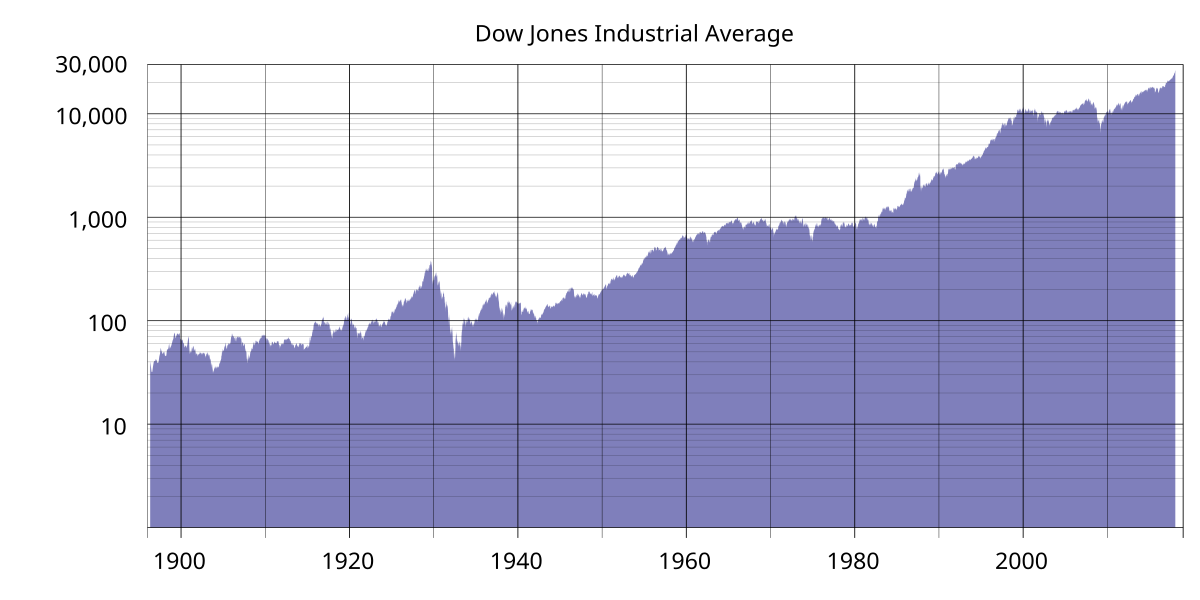
The DJIA’s long history is full of dramatic moments — from record-breaking rallies to gut-wrenching crashes. Each major movement tells a story about what was happening in the economy at the time.
During the Great Depression of the 1930s, for example, the Dow lost nearly 90% of its value — a devastating blow that took decades to recover from. Fast forward to the dot-com boom of the late 1990s, and the index surged as tech stocks exploded in popularity. Then came the 2008 financial crisis, when it again saw massive declines before bouncing back to new highs in the years that followed.
In recent times, the DJIA has surpassed milestones like 30,000 points, a level once considered unimaginable. That growth reflects not just inflation or the passage of time, but also the incredible evolution of corporate America — from railroads and steel mills to cloud computing and biotech.
Every high and low in the Dow tells part of the story of American capitalism: its resilience, its innovation, and its constant transformation.
Criticisms of the DJIA
Even though the DJIA is iconic, it’s not without its critics. Many financial experts argue that it’s too limited to represent the full U.S. economy. After all, 30 companies is a tiny sample size compared to the thousands of publicly traded corporations out there. That’s why some analysts prefer broader indexes like the S&P 500, which includes 500 companies and uses market capitalization weighting.
Another criticism is the price-weighted system mentioned earlier. Because it’s based on stock prices rather than company size, a stock split can dramatically change a company’s influence on the index even though its market value hasn’t changed. This can sometimes distort the Dow’s movements in ways that don’t truly reflect economic reality.
Still, despite these drawbacks, the DJIA’s long history and cultural significance make it hard to ignore. For many investors and journalists, it remains the go-to shorthand for “how the market is doing.”
The DJIA’s Role in Today’s Economy
In today’s fast-moving world of algorithmic trading, cryptocurrencies, and global markets, some might wonder whether the DJIA still matters. The answer is — absolutely, yes. While it’s no longer the only measure investors rely on, it continues to play a major role in shaping public perception of financial health.
When the Dow goes up, consumer confidence tends to follow. Businesses invest more, and investors feel comfortable taking risks. When it drops, people tighten their spending, and caution spreads through the economy. In that sense, the Dow is as much a psychological indicator as it is a financial one.
Furthermore, media coverage keeps it at the center of public attention. Every time you hear “the Dow hit another record high,” it reinforces the idea that the index represents the strength and spirit of the U.S. economy.
Final Thoughts: The Timeless Legacy of the DJIA
More than just a number, the Dow Jones Industrial Average is a living record of economic progress. From its humble beginnings with 12 industrial firms to its current lineup of 30 corporate giants, the DJIA tells a story of growth, innovation, and change. It’s not perfect, but it’s powerful — a reflection of both the triumphs and the turbulence that shape global markets.
Whether you’re a beginner trying to understand the basics of investing or a seasoned trader watching every tick, the DJIA remains a symbol of financial history in motion. It’s a reminder that the market, like the world itself, never stands still.